Henna has been used for centuries to colour and care for hair. Today, it is increasingly popular among people looking for a natural alternative to conventional hair dyes. But not all henna powders are equal. Even just the fact that henna grows in several different countries, from Marocco to India, makes that henna powders will look different, smell different and color slightly differently.
The quality of henna can vary considerably depending on where it is grown, when it is harvested, how the leaves are processed and how carefully the powder is prepared. These differences can have a significant impact on colour intensity, consistency, application and the final result.
So, how can you distinguish high-quality henna from an inferior product?
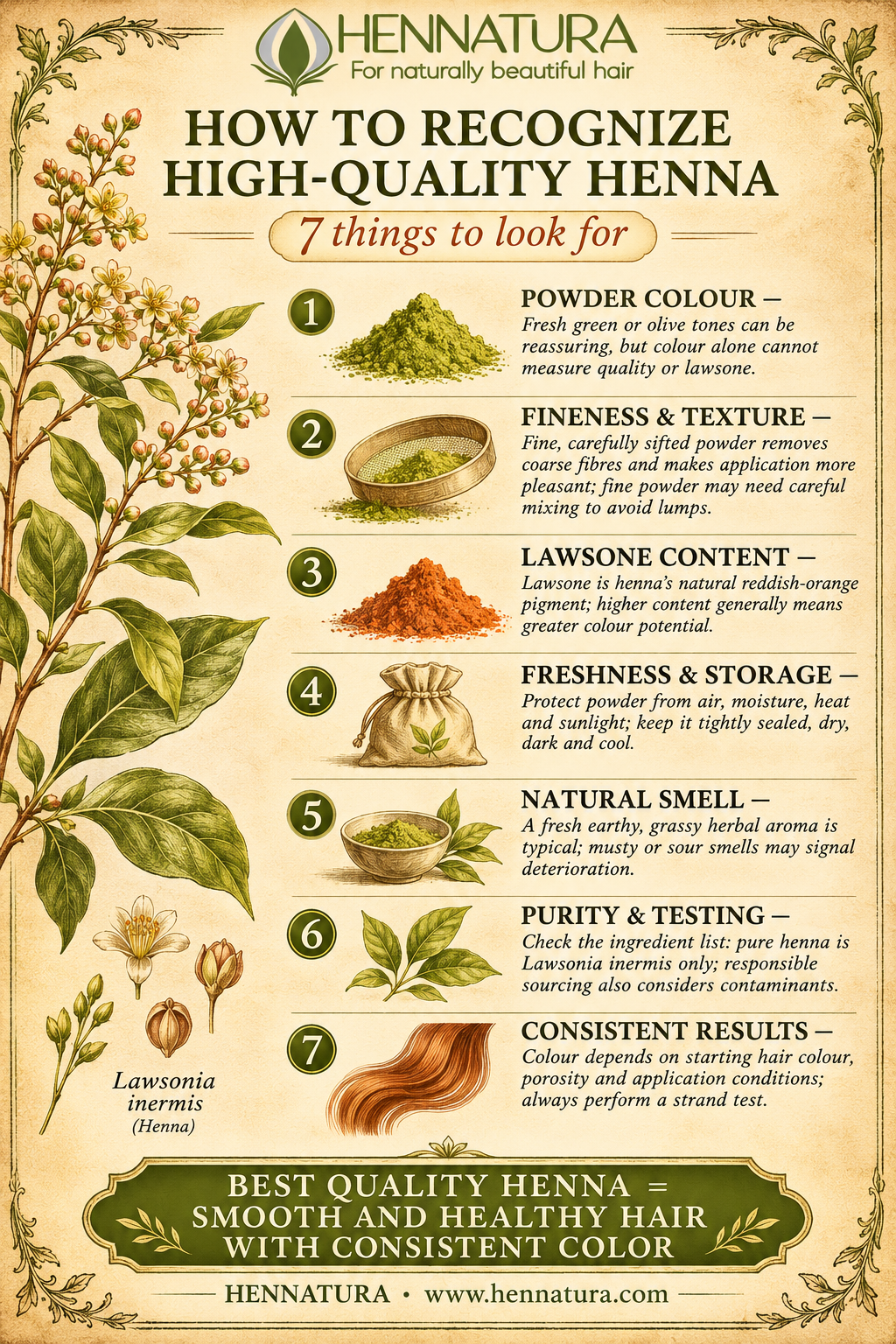
1. The Colour of the Powder
One of the first things people notice when opening a pouch with henna is the colour of the powder.
Good-quality henna is generally characterized by a relatively fresh-looking bright green or olive-green appearance. However, the exact shade can vary depending on the origin, harvest conditions and processing methods.
If the powder is claimed to be pure henna, meaning not mixed with other herbs or additives, a dull, brownish or greyish appearance can sometimes indicate that the powder is old, oxidized or has been stored incorrectly.
However, colour alone is not a reliable indicator of quality. Two henna powders can look very similar but perform differently when applied to hair.
An important distinction is that the natural green colour of henna powder comes from the plant material and how it has been refined, whereas its colouring properties are primarily associated with a naturally occurring compound called lawsone.
In general henna powder color is a tell-tale of the region of origin:
- henna powders from India look very light green. This is because henna from India is mostly grown in the desert region of Rajasthan. In this region, drying of henna leaves occurs mostly in direct sunlight. Additionally, the finer the powder, the lighter the color. The reason for this is an optical effect, called diffraction of light. This is similar to the color of sand: sand beaches are often looking more white when the sand is more fine.
- henna powders from Egypt, Iran and Yemen are darker olive or forest green. This is because henna in these regions grows in mountain regions and drying of the leaves occurs mainly in the shadow. In general henna from these regions is less fine, but is therefore more rich of additional healthy oily substances.
- henna powders from Marocco are bright green. This is because they grow in desert like areas and are very finely ground and sifted, typically by hand.
2. Fineness and Texture: The Importance of Proper Milling and Sifting
High-quality henna is typically finely milled and especially carefully sifted to remove coarse plant fibers, stems and other unwanted material like sand from the ground.
Why does this matter?
A finer powder offers some practical advantages:
- Smoother hair: If the powder contains impurities, such as sand or small plant residuals, these will end up being encapsulated between the henna and your hair, making your hair slightly rough. Finer and especially well sifted henna powder will, on the contrary, make your hair very smooth and more manageable.
- More pleasant experience: A smooth paste is easier to handle and apply, particularly when colouring long or thick hair.
However it must be noted that what some people state, namely that finer powders mix easier with water, is a myth. As a matter of fact, it is exactly the opposite: the finer and the higher the quality of the henna powder the more lumps it will form – unless you put extra efforts and measures to mix it carefully! The reason is that finer particles stick much stronger to each other because increased surface area, which enhances the effect of the physical forces such as electrostatic and “van der Waals” that keep them together. In other words, fine powders are more sticky. You can certainly obtain the most smooth paste possible with finer powders, however this requires more careful and lengthy mixing procedures. “Mhendy” artists know best how to mix so called “Body Art Quality” (BAQ) powders, which are the finest, to obtain a very smooth paste. For tattoo artists a coarse and not sifted powder is a big no-no, as it can clog the “cones” and pencils used to draw on the skin.
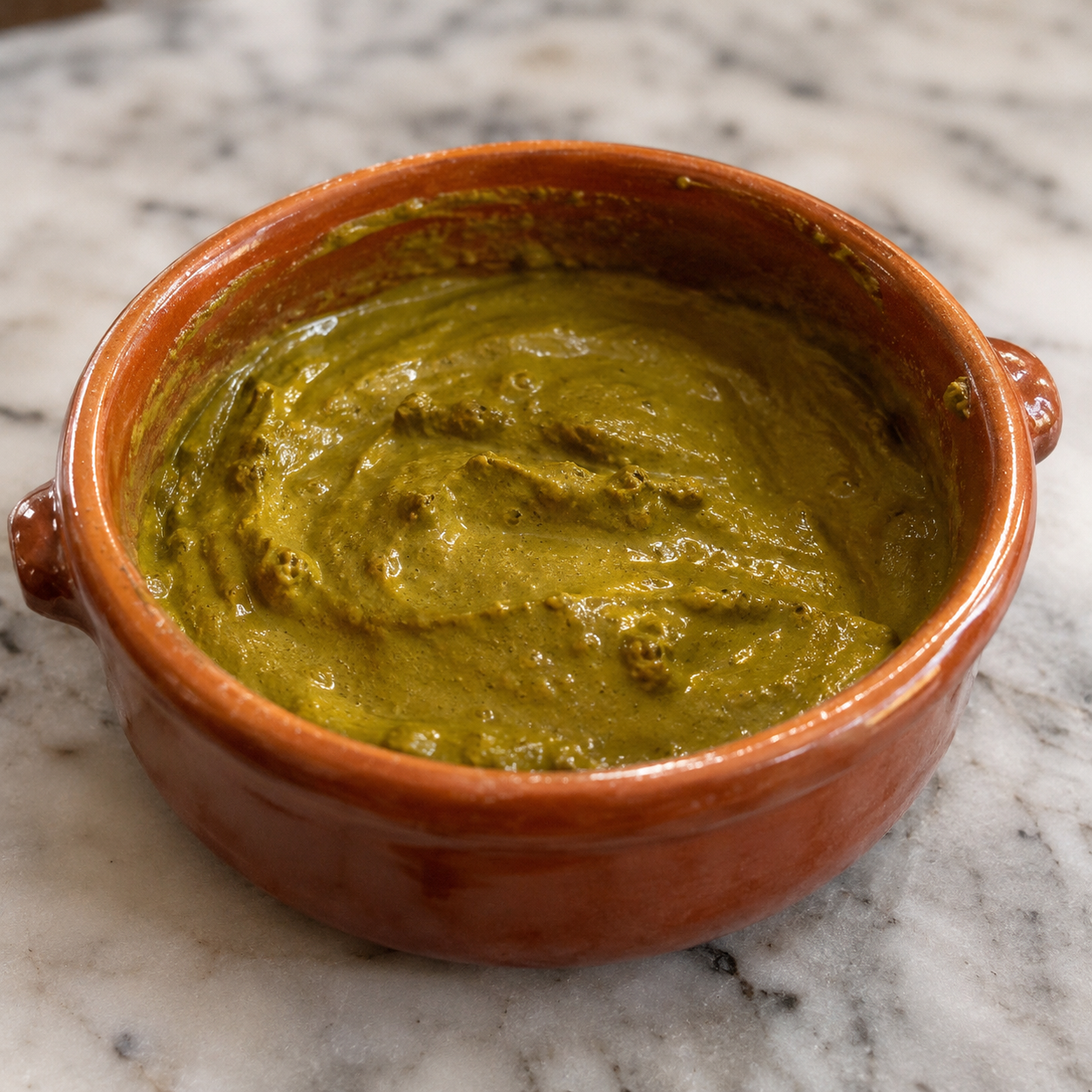
However, this does not reduce the coloring and nourishing effectiveness of the paste. It is in fact your personal experience and choice whether you like to have a smooth paste or not. The easiest way to remove the clumps is to use a mixer on the paste once it is mixed with water. Alternatively, you can mix small amounts bit by bit, by carefully pouring water slowly and steering a lot with the mixing spoon. We advise these procedures for people who have very long or curly hair.
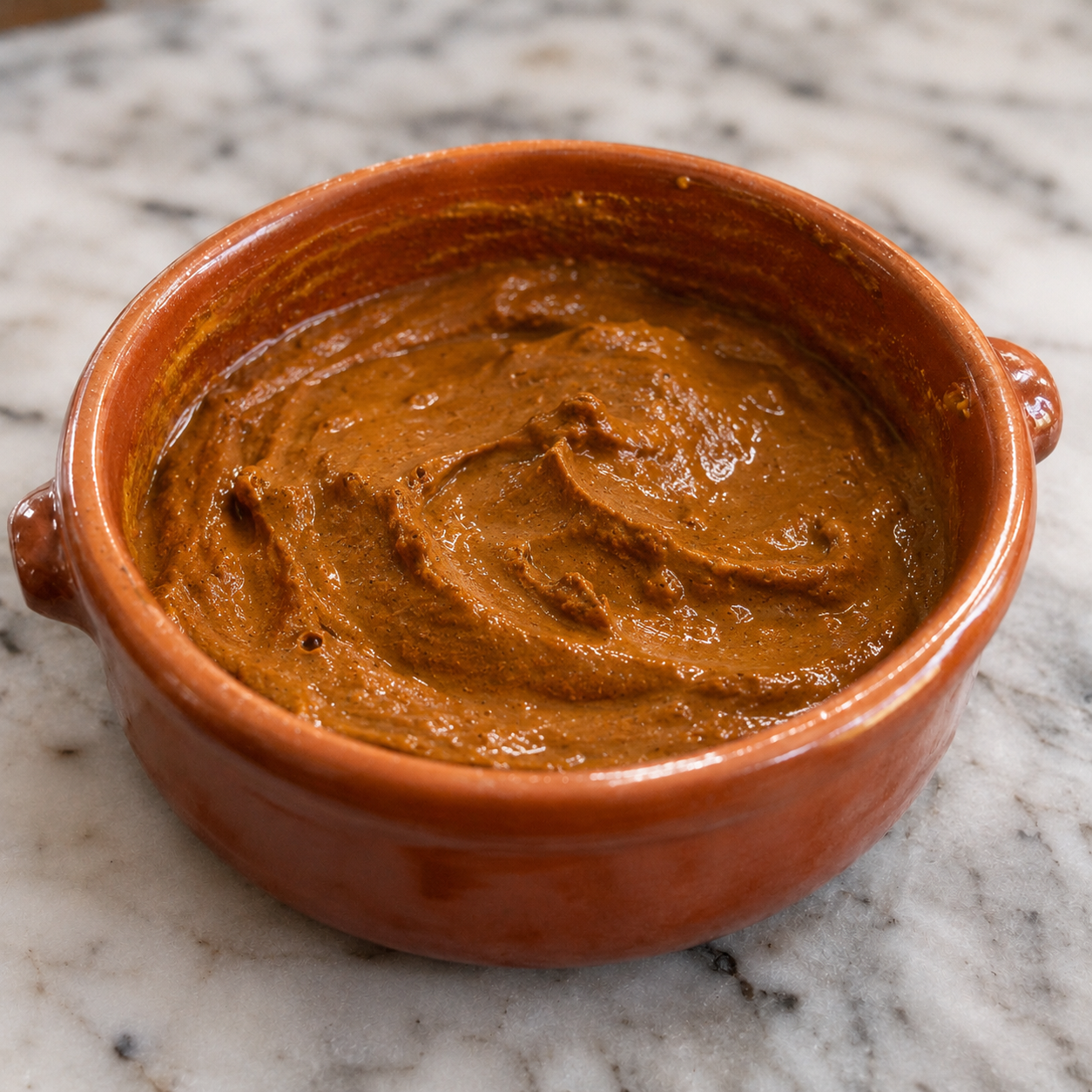
One more difference that people may notice is that some powders require more water than others for obtaining the same yogurt-like paste. This property does not necessarily relates to quality: generally finer powders will require more water, but also powders originating from different countries will require slightly different amounts of water to achieve the same consistency.
Henna powder is a fully natural product that is processed in different ways in different countries. All these methods may lead to slight different coloring experiences, yet the wonders of henna are the same, provided that the powder is pure and not mixed with dangerous additives.
3. Lawsone Content: The Science Behind Henna’s Colouring Power
Perhaps the most important quality parameter of henna is its lawsone content.
Lawsone (2-hydroxy-1,4-naphthoquinone) is the naturally occurring pigment responsible for henna’s characteristic reddish-orange colouring properties.
When henna is mixed with water, lawsone becomes available for release from the plant material. During application, it binds to keratin, the protein that makes up human hair, creating the characteristic reddish tones associated with henna.
The amount of lawsone naturally present in henna leaves can vary depending on several factors:
- The geographical origin of the plant.
- The variety and growing conditions.
- The maturity of the leaves at harvest.
- The time of year and harvesting conditions.
- The drying, milling and storage processes.
Two henna powders can therefore produce noticeably different colouring results, even when they are both labelled as 100% pure henna.
A higher lawsone content generally indicates greater pigment potential, although the final colour also depends on the hair’s starting colour, porosity, application conditions and processing time.
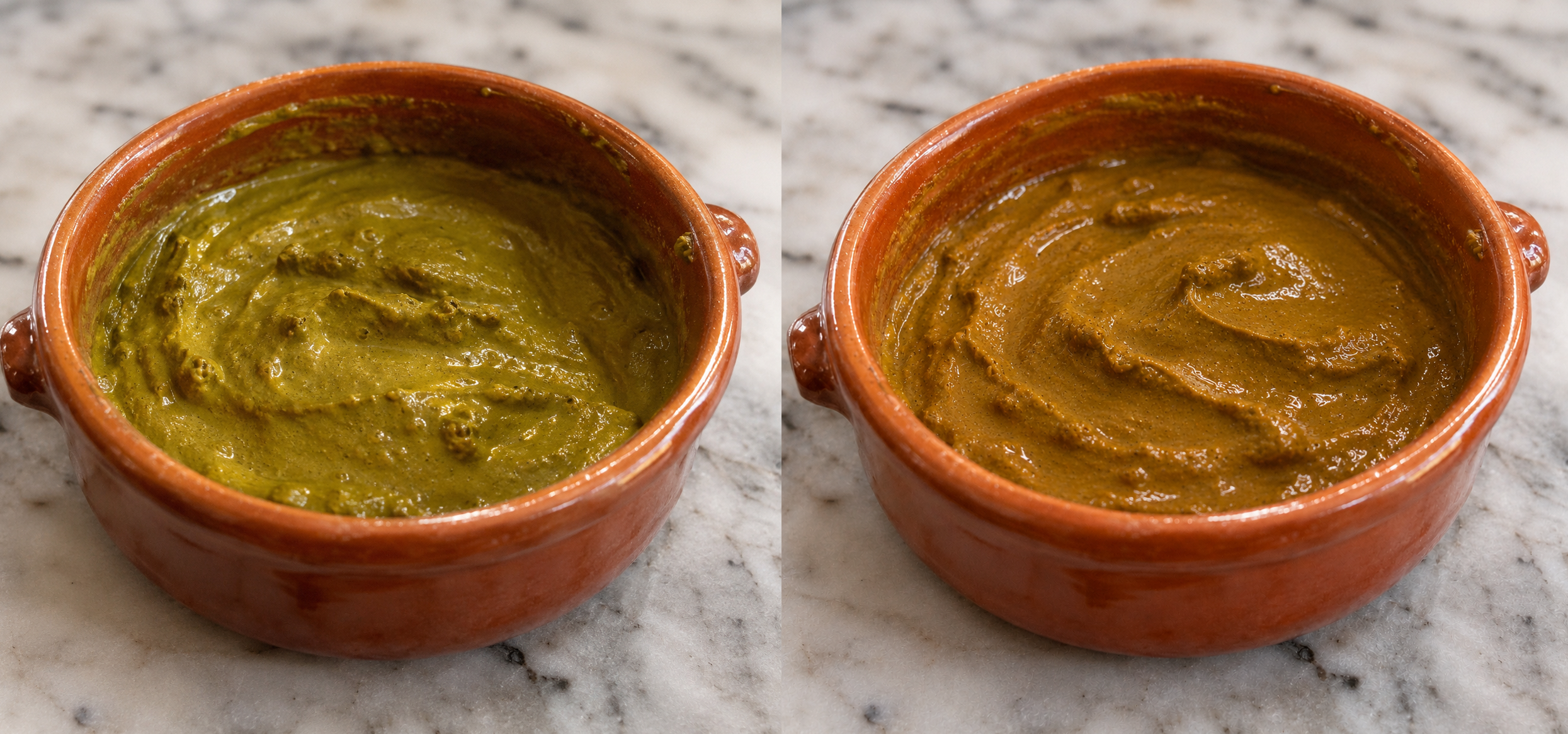
Importantly, the green appearance of the powder does not tell you how much lawsone it contains. Hennatura herbal mixes are designed such that the dye is released fast by mixing simply with hot water, so that the coloring performance and experience is as simple and pleasant as possible.
4. Freshness: Why Harvesting and Storage Matter
Like many botanical ingredients, henna is sensitive to environmental conditions.
Exposure to oxygen, moisture, heat and sunlight can gradually affect the quality of the powder and its colouring performance.
Freshly processed henna, stored under appropriate conditions, is generally preferable to powder that has been sitting in unsuitable storage conditions for extended periods.
Moisture is particularly important. Henna should be kept dry because excessive moisture can compromise its quality and potentially encourage microbial growth.
Packaging also plays an important role. Properly sealed packaging helps protect the powder from humidity, oxygen and external contamination.
Once the henna powder packaging is open, it is best practice to reseal it as tight as possible so as little air and moisture as possible is trapped, close it with tape and inside the metalized pouch provided with all Hennatura products. If preserved correctly (dry, dark and cool storage) it can be used again after 3 to 6 months.
5. The Smell: A Useful but Limited Quality Indicator
Pure henna has a distinctive natural, earthy, herbal smell.
Some people describe it as reminiscent of dried grass, freshly cut plants or hay. The exact aroma can vary depending on the botanical origin and processing conditions.
A fresh, characteristic herbal smell can be reassuring, particularly when combined with other positive quality indicators.
Conversely, an unusual musty, sour or unpleasant smell may indicate that the powder has been exposed to moisture or has deteriorated.
However, smell is subjective and should never be used as the sole method of assessing quality.
6. Purity: What Is Actually Inside the Package?
A product labelled as henna is not necessarily made exclusively from henna leaves.
Some products contain mixtures of different botanical powders, while others may contain additional ingredients, some of which may be banned, that are not immediately obvious to consumers.
For someone specifically looking for pure henna, it is important to check the ingredient declaration carefully.
The botanical name for henna is Lawsonia inermis. If you are buying a product advertised as 100% pure henna, this should be its only ingredient.
Also pay attention to vague descriptions such as “natural henna” or “herbal hair colour”. These terms do not necessarily mean that a product contains only henna.
For multi-plant hair dyes, different botanical ingredients can be combined to create a wider range of colours, including auburn, brown and burgundy shades. Such blends can be perfectly legitimate, provided that their composition is clearly declared.
Responsible brands like Hennatura always pay attention to potential impurities, including heavy metals, pesticide residues and microbiological contamination. Although according to EU regulations anyhdrous powders for hair do not need to be necessarily tested for these impurities, at Hennatura we find important that we source the best quality henna and herbal powders possible. Therefore our powders are tested by reputable laboratories for every new batch, both in the country of origin and, when possible, in Europe.
7. Consistency of Colour Results: The Ultimate Practical Test
Ultimately, one of the most important characteristics of good-quality henna is its ability to deliver predictable and consistent colouring results.
Even when a powder looks and smells excellent, its actual performance on hair is what matters most.
A good-quality product should offer reasonably consistent results between batches when used under comparable conditions.
However, it is important to understand that henna does not behave like conventional oxidative hair dyes.
The final result depends on several factors:
- The original hair colour.
- The proportion of grey hair.
- Hair porosity and condition.
- The amount of product used.
- Water temperature and mixing conditions.
- Application time.
- Whether the hair has previously been coloured or chemically treated.
For this reason, a strand test is always recommended before colouring the entire head.
A useful approach is to test the product on a small section of your hair or a small amount collected from your hair brush, and observe the result after the colour has fully developed (typically one week).
Why We Believe Henna Quality Should Never Be Compromised
At Hennatura, we believe that plant-based hair colouring deserves the same attention to quality, consistency and performance as any other modern cosmetic product.
Based in the Netherlands, we develop henna-based hair dyes for the European market, combining carefully selected botanical ingredients with attention to formulation and processing.
Our approach goes beyond simply sourcing natural powders. We believe that the fineness of the ingredients, their quality, the formulation and the final application experience all contribute to the result.