
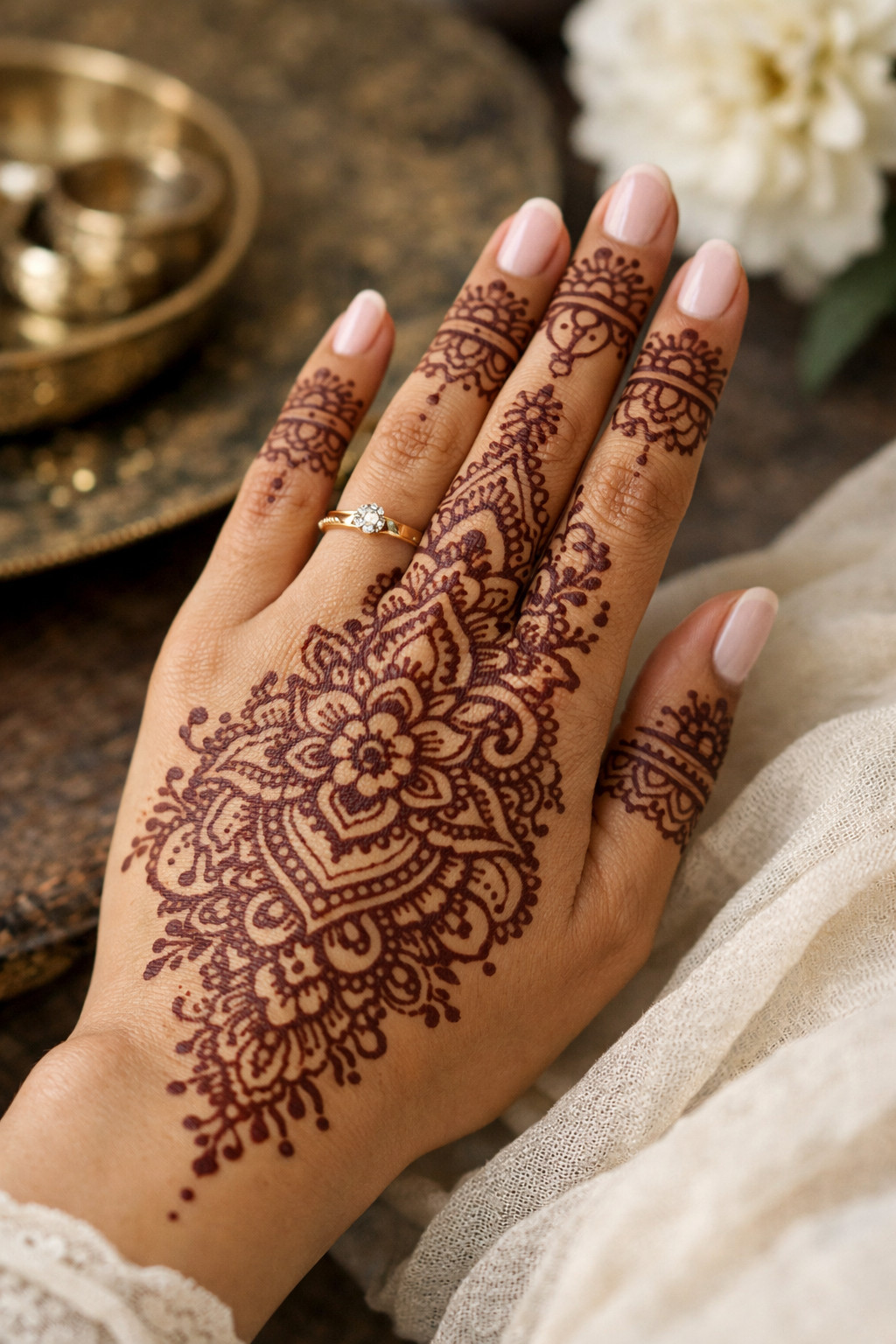
Mehndi, also known as henna body art, is a traditional form of temporary skin decoration created using a paste derived from the leaves of the henna plant. Celebrated for its intricate patterns and deep cultural symbolism, Mehndi has been practiced for thousands of years across parts of Africa, the Middle East, and South Asia. Today, it remains an essential element of many cultural and religious celebrations, especially weddings and festivals.
Historical origins
The use of henna dates back over 5,000 years. Archaeological evidence suggests that henna was used in past civilizations such as ancient Egypt, where it was applied to dye hair, stain nails, and even adorn the bodies of mummies. It is believed that queens like Cleopatra may have used henna as part of their beauty rituals. From Egypt, the tradition spread across North Africa and into the Arabian Peninsula.
Henna also became deeply rooted in South Asian culture, particularly in India and Pakistan. Over centuries, Mehndi evolved into a highly refined art form in these regions, characterized by detailed floral, paisley, and geometric motifs. Trade routes and cultural exchanges further carried henna traditions into Morocco and other parts of the Mediterranean.
The Henna plant and its use
Henna is made by drying and grinding the leaves of Lawsonia inermis, a plant that grows in desert and sub-tropical climates, into a fine powder. When mixed with water, lemon juice, or essential oils, it forms a smooth paste that releases a natural dye molecule called lawsone. This dye binds with proteins in the skin (and hair), producing a reddish-brown stain that typically lasts one to three weeks on the skin (and is permanent on hair).
Traditionally, henna for body art is applied using a cone, stick, or syringe-like tool, allowing artists to create elaborate patterns. The paste is left on the skin for several hours before being scraped off, revealing an orange stain that gradually darkens over 24 to 48 hours. The depth of color often depends on the type of henna powder, temperature, skin type, and aftercare practices.
Cultural and religious significance
Mehndi is a traditional ritual in weddings. In many South Asian cultures and religions, a pre-wedding ceremony known as the “Mehndi night” is held, during which the bride’s hands and feet are adorned with intricate designs. The patterns often include symbols of love, prosperity, and protection. In some customs, the groom’s name is hidden within the design, and he must find it after the wedding ceremony.
The tradition also dictates that the darker the tint of the design, the deeper the love of the married couple. For this reason, tattoo artists seek for henna powders that release dark dye, or use methods to extract as much as possible dye. Alternatively, indigo powder can be mixed with henna, so that it becomes even darker.
Henna is also used during religious festivals such as Eid al-Fitr and Diwali, symbolizing joy, beauty, and celebration. In North African and Middle Eastern cultures, henna may be applied to protect against the “evil eye” and bring blessings. Beyond weddings and festivals, henna is sometimes used in rites of passage, including births and coming-of-age celebrations.
Modern popularity
In recent decades, Mehndi has gained global popularity beyond its traditional cultural roots. Temporary henna tattoos are now commonly seen at music festivals, cultural fairs, and fashion events around the world. Many people are drawn to henna as a natural, painless alternative to permanent tattoos.
Despite its widespread appeal, Mehndi remains deeply connected to its cultural heritage. For many communities, it is not merely decorative but a meaningful expression of identity, tradition, and celebration. The art of Mehndi continues to be passed down through generations, preserving ancient customs while adapting to modern styles.